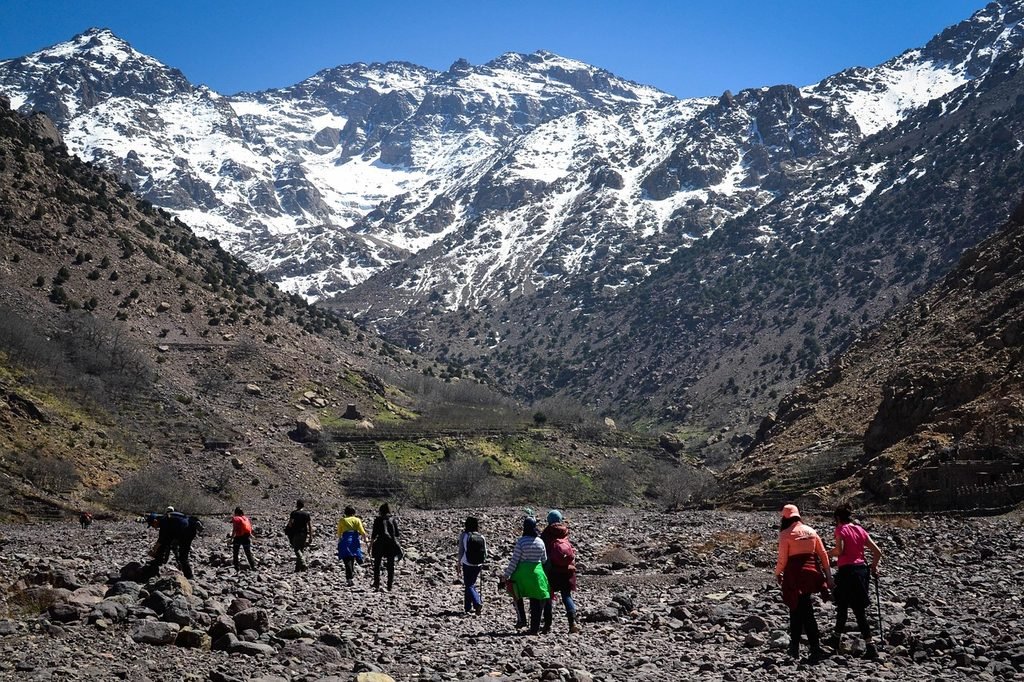
Planning a Mount Toubkal 2-day trek is the ultimate adventure for travelers visiting Morocco. Standing at 4,167 meters (13,671 feet), Mount Toubkal is North Africa’s highest peak. Located in the High Atlas mountain range just 65 kilometers south of Marrakech, it offers one of the most accessible non-technical 4,000-meter climbs in the world.
Whether you are an experienced hiker or looking for your first high-altitude summit, this complete Mount Toubkal 2-day trek guide covers everything from local guide rules and winter gear requirements to day-by-day trail logistics.
If you are looking for the ultimate High Atlas adventure, booking a Mount Toubkal 2-day trek is the absolute best place to start. Standing at 4,167 meters (13,671 feet), Mount Toubkal is North Africa’s highest peak, and taking on a Mount Toubkal 2-day trek allows you to experience stunning Amazigh valleys, dramatic high-altitude landscapes, and breathtaking alpine sunrises. Located just 65 kilometers south of Marrakech, a Mount Toubkal 2-day trek offers one of the most accessible non-technical 4,000-meter climbs in the world. Whether you are an experienced hiker or attempting your first major summit, this ultimate guide covers everything you need to plan a successful Mount Toubkal 2-day trek from start to finish.
Quick Facts: Mount Toubkal at a Glance
| Feature | Details |
| Total Distance | ~31 km (19.2 miles) round-trip |
| Elevation Gain | ~2,427 m (7,962 ft) total gain |
| Max Elevation | 4,167 m / 13,671 ft |
| Starting Point | Imlil Village (1,740 m / 5,708 ft) |
| Difficulty Level | Strenuous (non-technical, but steep scree and high altitude) |
| Best Season | Late spring (April–May) and Autumn (September–November) |
Important Rules: Do You Need a Guide for Mount Toubkal?
Yes. Following regulatory changes in late 2018, a licensed local mountain guide is mandatory for all trekkers attempting Mount Toubkal.
- Checkpoints: You will pass several official police checkpoints along the trail starting at Imlil. You must present your passport and be accompanied by your registered guide to pass.
- Hiring a Guide: You can book an all-inclusive tour online from Marrakech or hire an accredited guide in Imlil upon arrival.
Detailed Mount Toubkal 2-Day Trek Itinerary
1. Day 1: Imlil to the Toubkal Refuge: Distance: ~12 km | Time: 5–6 hours | Elevation Gain: 1,467 m.
- Departure: Start early from Imlil (1,740 m). Most trekkers leave Marrakech by grand taxi or private transport around 6:00 AM to start hiking from Imlil by 8:30 AM.
- The Trail: The trail gently weaves past the Amazigh (Berber) village of Aroumd and climbs through the Ait Mizane Valley.
- Sidi Chamarouch: Around halfway to the refuge, you’ll reach the shrine of Sidi Chamarouch (2,310 m). This is a great place to stop for fresh orange juice and lunch at a local teahouse.
- Arrival at Refuge: Continue the steadily steepening trail until reaching the refuges at 3,207 m either the Refuge du Toubkal (CAF) or Les Mouflons. Check in, rest, and hydrate early to help your body acclimate.
2. Day 2: Refuge to Toubkal Summit and Return to Imlil: Distance: ~19 km | Time: 8–10 hours | Elevation Gain: 960 m (up) / 2,427 m (down).
- Summit Push (3:30 AM–4:30 AM): Wake up early for breakfast and hit the trail before dawn with headlamps. The initial ascent climbs a steep scree field behind the refuge.
- The Ridge & Peak: Cross the South Tizi n’Toubkal pass (3,940 m) as daylight appears. The final section follows a high ridge to the metal pyramid marking the 4,167 m summit.
- The View: Enjoy 360-degree views stretching across the Atlas range and south toward the Sahara Desert on clear days.
- The Descent: Carefully descend the loose scree back to the refuge for lunch and a short break, then continue downhill all the way back to Imlil for your return transport to Marrakech.
Essential Packing List for Mount Toubkal
Weather conditions vary drastically between the valley floor in Imlil and the freezing summit ridge. Layering is key.
Clothing & Footwear
- Layering System: Moisture-wicking base layer, fleece mid-layer, and a packable down jacket.
- Outer Layer: Windproof and waterproof hard-shell jacket and pants.
- Footwear: Sturdy, broken-in hiking boots with good ankle support.
- Warm Accessories: Thermal beanie, heavy gloves, neck gaiter, and thick wool socks.
Essential Gear
- Daypack: 30L–40L pack for daily gear (mules can carry heavier bags to the refuge if booked with your guide).
- Lighting: Headlamp with extra batteries (essential for the 4:00 AM summit attempt).
- Trekking Poles: Highly recommended to preserve your knees during the steep 2,400-meter descent on Day 2.
- Hydration: At least 2–3 liters of water capacity (a hydration bladder plus insulated bottle).
Winter Gear Note (November to April): Crampons and an ice axe are mandatory during winter conditions. Most guides in Imlil provide or rent technical winter equipment.
Frequently Asked Questions
How hard is the climb?
While Mount Toubkal requires no technical rock climbing skills, it is physically demanding. You must be in good cardiovascular shape to handle steep gains and high altitude over two consecutive days.
What about altitude sickness?
Because you gain almost 2,500 meters of elevation in 24 to 36 hours, mild symptoms of Acute Mountain Sickness (AMS) such as light headaches or nausea are common. Stay well-hydrated, walk at a slow and steady pace (“شوية شوية” or shwiya shwiya in Moroccan Darija), and let your guide know if you feel unwell.
Where do you sleep on the mountain?
Trekkers stay in dormitory-style mountain refuges at 3,207 meters. Bunk beds and hot showers are available, but you should bring a warm sleep sack or sleeping bag liner for comfort.
Winter Mountaineering on Mount Toubkal 2-day Trek (November to April)
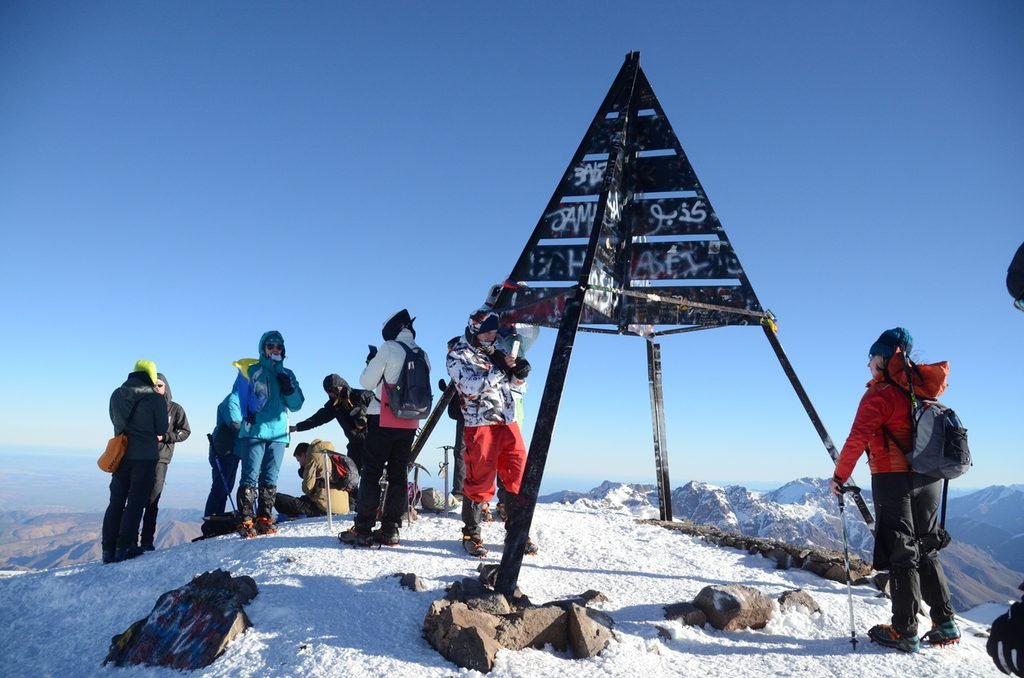
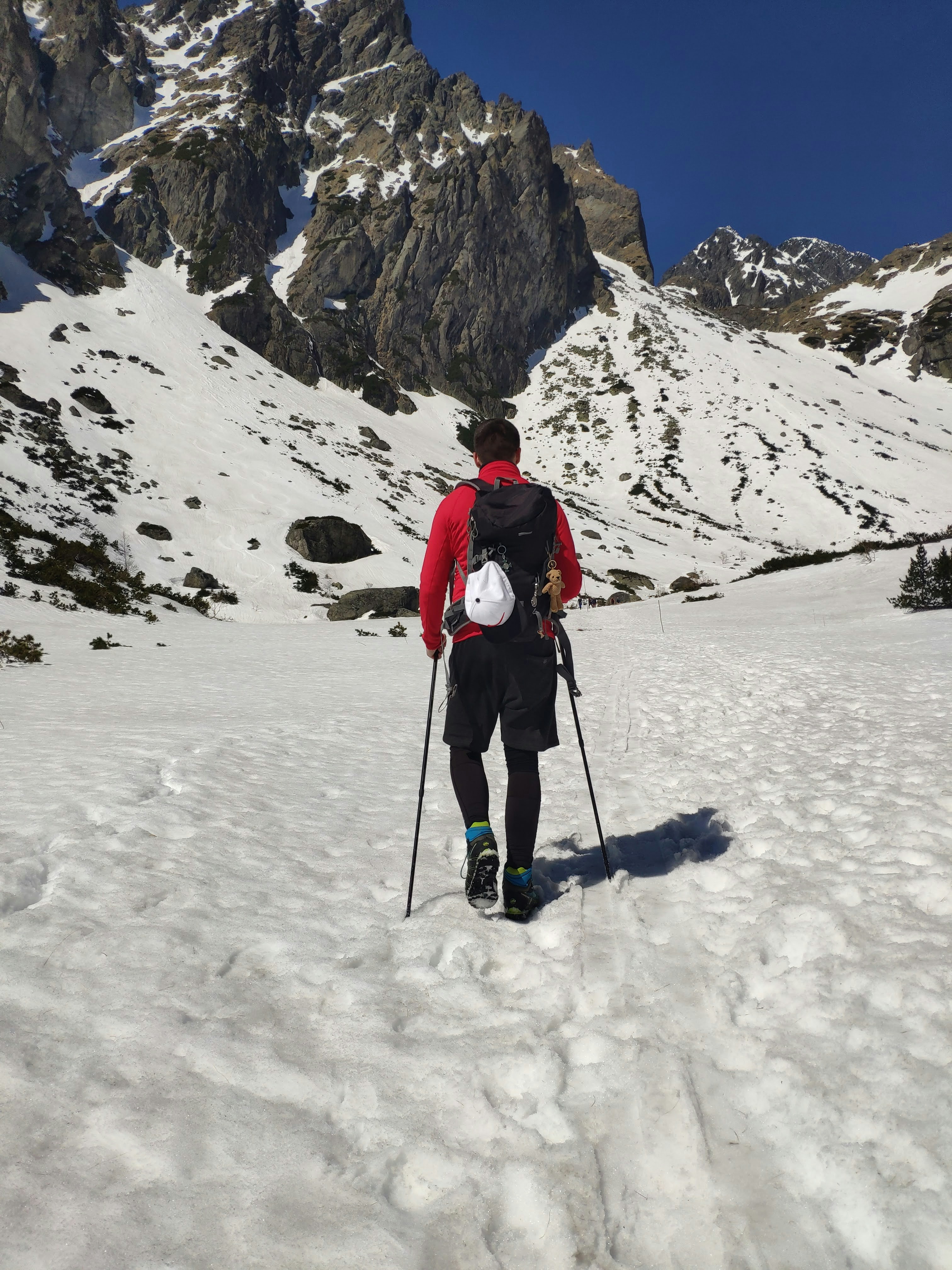
While summer on Toubkal is a challenging mountain trek, winter transforms it into a true mountaineering expedition. Snow typically blankets the trail above 2,500 meters from November through April, turning the steep scree gullies into solid snow slopes and bulletproof ice.
If you are planning a winter summit, the route remains non-technical, but it requires specialized gear, cold-weather preparation, and strict adherence to alpine safety protocols.
Mandatory Winter Gear Checklist
In addition to your standard cold-weather layering system, winter ascents require technical mountaineering equipment:
- 12-Point Crampons: Strap-on or semi-rigid crampons (ensure your boots have a stiff sole capable of holding them).
- Walking Ice Axe (50–65 cm): Essential for self-arrest in the event of a slip on hard-packed snow or ice.
- Rigid B2/B3 Boots or Stiff Winter Hiking Boots: Flexible trail runners or soft summer boots will cause crampons to slip off or bend dangerously.
- Mountaineering Helmet: Protects against falling rock or ice dislodged by climbers above you in the narrow gullies.
- Gaiters: Essential for keeping deep snow out of your boots on the trail between Sidi Chamarouch and the refuge.
- Category 3 or 4 Glacier Glasses: High-altitude UV exposure combined with snow glare can quickly cause snow blindness.
Crampon Hire & Equipment Rental in Imlil
You do not need to fly into Morocco with bulky winter gear. Imlil is full of gear rental shops offering technical mountaineering equipment.
| Gear Item | Average Daily Rental Cost (MAD) | Approx. Cost (USD/EUR) | Notes |
|---|---|---|---|
| Crampons | 50 – 80 MAD | ~$5 – $8 / €5 – €8 | Inspect strap mechanisms before leaving the shop. |
| Ice Axe | 40 – 60 MAD | ~$4 – $6 / €4 – €6 | Choose an axe length where the spike reaches your ankle when held at your side. |
| Mountaineering Boots | 80 – 120 MAD | ~$8 – $12 / €8 – €12 | Try on boots with your winter wool socks to ensure a tight, rigid fit. |
| Gaiters & Trekking Poles | 30 – 50 MAD | ~$3 – $5 / €3 – €5 | Highly recommended for deep snow. |
Pro Tip: If booking through an official local guide service, equipment rental is often bundled into your overall winter package. Always double-check boot sizes and crampon adjustments in Imlil the evening before starting your trek.
Critical Winter Safety Tips
1. Practice Self-Arrest Before the Summit Push
Having an ice axe is useless if you do not know how to use it. On Afternoon 1 near the refuge (3,207 m), ask your mountain guide to demonstrate how to kick steps, walk in crampons using the french technique (flat-footing), and perform a self-arrest slide stop using your ice axe spike.
2. Beware of Avalanche Risk
The South Cleft (Combe Sud) route up Toubkal features steep gullies prone to wind slabs and avalanches after fresh snowfall or rapid warming. Local licensed guides monitor snow pack stability daily; never force a summit attempt if your guide advises against it due to snow conditions.
3. Respect Early Alpine Starts
Winter summit pushes typically leave the refuge around 3:30 AM – 4:00 AM. Moving early allows you to climb the steepest snow slopes while the pack is firmly frozen, minimizing the effort required to break trail through soft midday snow on your descent.
4. Manage Freezing Hydration
Temperatures at the summit ridge routinely drop between -10°C and -20°C (14°F to -4°F) with wind chill. Water bladders with thin hoses will freeze solid within minutes. Wrap your water bottles inside wool socks or use insulated flasks with hot mint tea.
To ensure your Mount Toubkal 2-day trek is a safe, seamless, and memorable success, advance planning is essential. Securing your licensed mountain guide, packing the right seasonal layering system, and preparing mentally for steep elevation gains are all key steps to conquering Morocco’s highest peak. Whether you tackle this route during the sunny months of spring or turn it into a technical winter mountaineering adventure, completing the Mount Toubkal 2-day trek remains one of the most rewarding outdoor experiences in North Africa. Start organizing your itinerary today, check off your gear requirements, and get ready to stand atop the High Atlas range on your own unforgettable Mount Toubkal 2-day trek.
PDF Checklist Layout & Overview